 Course Kit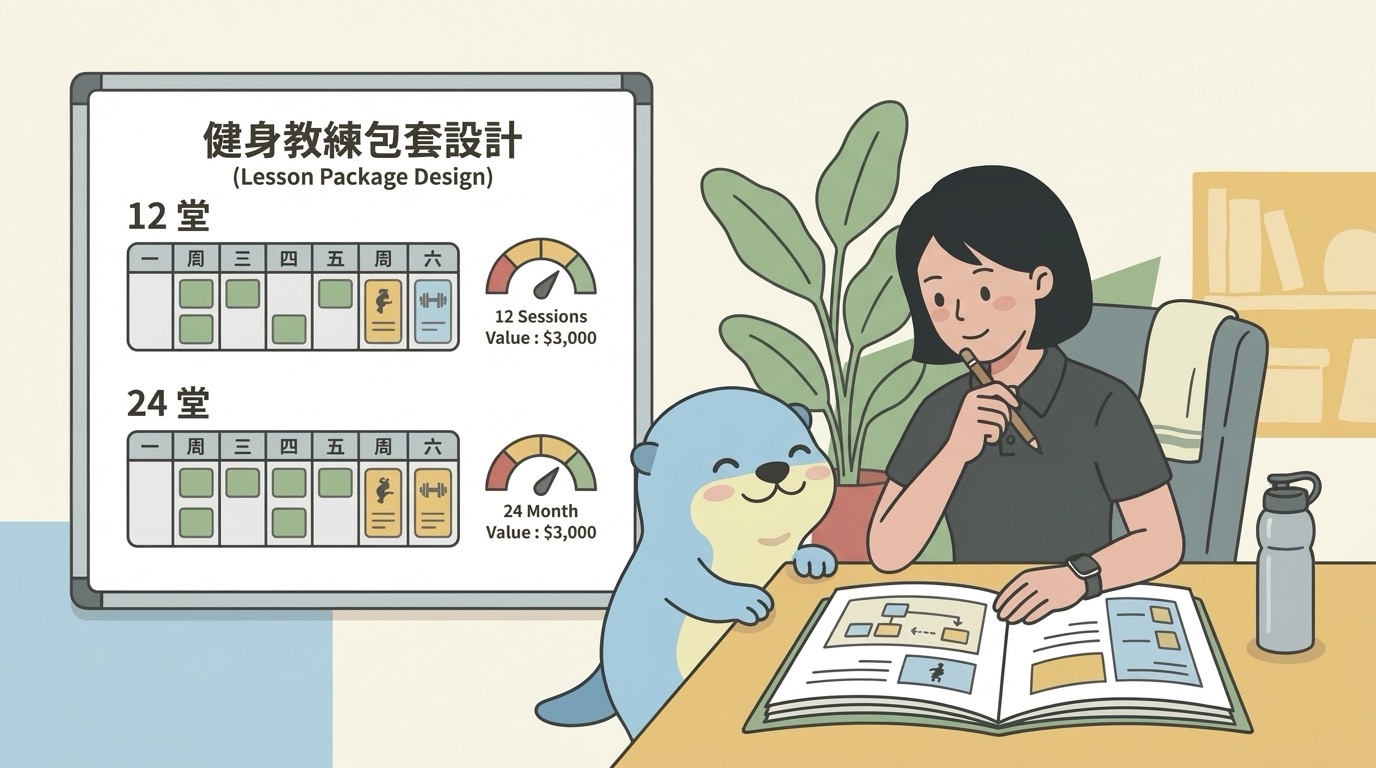
Key Takeaway
Design a package backward from three constraints: your weekly available slots, your real cost per session, and how often the client actually trains. That tells you whether 12 or 24 sessions is deliverable.
The two tiers differ in commitment length. Start at 12 sessions to build the routine, then consider 24 once the weekly slot holds.
In This Article
- 5 Core Concepts to Clarify Before Designing Packages
- Start With 4 Numbers Before Designing a Package
- 12 vs. 24 Sessions: Commitment Length, Not Package Size
- How to Structure a 12-Session Package
- Setting Expiration Dates for 24 Sessions
- What Goes into Package Pricing?
- Run a Fulfillment Stress Test
- Package Terms and Cancellation Rules
- When to Sell 12 Sessions vs. 24 Sessions
- Review Every 4 to 6 Sessions
- FAQ
- Conclusion
How should you design a personal training package? The right size is not the most tempting per-session rate. Work backward from your weekly available slots, your real cost per session, and how often the client actually trains, leave a buffer for cancellations and make-up sessions, then pick 12 or 24.
A good package is not about packing in more sessions for a bigger discount. It is about whether you can deliver the whole thing inside the promised window.
Selling 24 sessions is not just cash today. It is 24 slots you owe over the next six months. Sell past your capacity and clients cannot book, your calendar jams, and unfulfilled sessions pile up.
5 Core Concepts to Clarify Before Designing Packages
Five terms cause most of the confusion:
- Fulfillment Capacity
The most sessions you can deliver reliably each month after prep, travel, admin, and rest come off the calendar.
- Minimum Breakeven per Session
Direct cost per session plus allocated monthly fixed cost plus your target income per session.
- Paid Sessions
The sessions the client actually paid for. Every refund is settled against this count.
- Complimentary Sessions
Free to the client, but they cost the same time and venue. Track them separately and give them an expiry, or they dilute your net rate and eat future slots.
- Unfulfilled Lessons
Paid but not yet delivered. This is a service liability, not realized profit.
How to Design Personal Training Packages: Start with 4 Numbers
Four numbers decide whether a package survives:
- Weekly available service slots
The full slots left after rest, meals, prep, admin, and travel.
- Cost per session
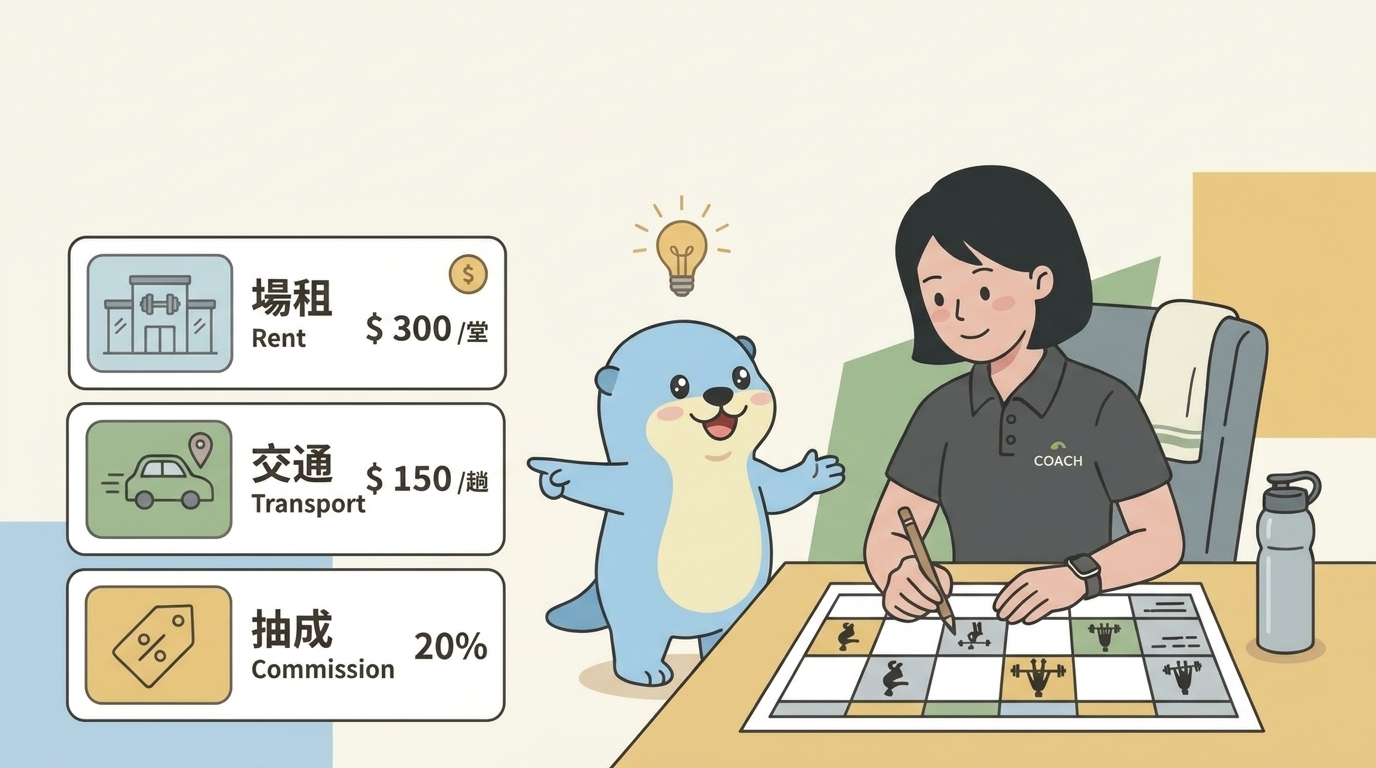
Venue rent, platform cuts, travel, setup time, and the cost of a last-minute cancellation.
- Expected weekly attendance
What the client's work and home life actually allow, not three disciplined sessions a week.
- Expiration timeframe and safety buffer
How many spare weeks the package holds for illness, travel, holiday closures, and your own time off.
These four say more about delivery than the session count does.
Calculate Monthly Capacity First: The Fulfillment Capacity Formula
Before you pick a session count, find your monthly ceiling:
Monthly Deliverable Sessions
= Weekly Available Service Slots × 4 Weeks × Target Fill Rate
An illustrative example, not a market benchmark: travel and admin leave you 25 one-on-one slots a week, cancellations and scheduling mismatches put the fill rate at a conservative 70%, and the month counts as 4 weeks.
25 slots × 4 weeks × 70% = 70 sessions
Those 70 sessions are a quality baseline, not guaranteed income. Subtract the slots already held by renewing clients, group classes, or side work. What is left is your real capacity for new clients.
12 vs. 24 Sessions: It's About Commitment Length, Not Package Size
Coaches often treat 12 sessions as the starter tier and discount 24 sessions to move volume. In practice the two differ in time commitment and fulfillment load:
| Package Tier | Client Commitment | Coach Fulfillment Requirement | Best Teaching Scenarios | Fulfillment Risks & Considerations |
|---|---|---|---|---|
| 12-Session Package | 2 to 3 months to build baseline habits, establish training rhythm, and evaluate fit. | Build movement mechanics and rapport quickly within a shorter cycle; easy to adjust schedule. | First-time clients, unclarified goals, or clients with unpredictable shift work and travel schedules. | Shorter timeframe; requires structured progress reviews by sessions 8 to 10 to prevent drop-offs between renewals. |
| 24-Session Package | 6+ months committed to long-term athletic progression and lifestyle transformation. | Lock in specific weekly time slots long-term; requires ample capacity for rescheduling and make-up classes. | Established clients with strong mutual trust, clear goals, and reliable weekly attendance. | Selling too many packages at once locks down future calendar availability and creates heavy scheduling debt. |
Neither tier is better. The session count has to match the client's attendance, your calendar capacity, and the flexibility of the expiry window.
How to Structure a 12-Session Package: Turn the First Phase into a Reviewable Cycle
Twelve sessions make a good first full cycle: long enough to cover assessment, movement learning, progressive overload, and early results, and long enough for you to judge attendance and recovery.
8 Key Fields to State in a 12-Session Package
To avoid disputes later, state these eight fields:
- Service Scope
Session length, training format, and whether off-day programming and messaging support are included.
- Expiration Date
Whether validity starts at purchase or at the first session, and the hard cutoff date.
- Booking Rules
Notice required, which slots are bookable, and the channel that confirms a booking.
- Cancellations and Rescheduling
The minimum notice either side must give.
- Attendance and No-Show Policies
The grace period for a late arrival, and whether an unexcused no-show costs a credit.
- Coach Unavailability
How validity extends, or how a substitute or make-up session is arranged.
- Payment and Refunds
Payment method and timing, plus the refund formula for early termination.
- Session Tracking Method
How both sides verify dates, notes, completed sessions, and remaining credits.
How to Set Expiration Dates for 12 Sessions?
A flat "three months, roughly 12 weeks" is fragile: once a week for 12 sessions fills exactly 12 weeks, so one bout of flu, one business trip, or one holiday closure pushes the package past expiry. Add a 2- to 4-week safety buffer instead, which puts a once-a-week 12-session package at 14 to 16 weeks. That protects the client and spares you a monthly negotiation over extensions.
How to Set Expiration Dates for 24 Sessions: Confirm You Can Hold Long-Term Slots
The problem with 24 sessions is rarely demand. Sign 5 or 10 at once and your prime slots are locked for six months. A half-year commitment calls for a more conservative expiry and a tighter cap on slots. Answer six questions before you sell it publicly:
- Will your weekly slots really hold for six months? Any chance you move, enroll in a long course, or switch facilities?
- Do you have openings to fit make-up sessions when clients cancel?
- Who covers these long-term clients when you are sick or away?
- If three clients buy 24 sessions in one month, do outstanding commitments pass your monthly ceiling?
- Does the goal really need 24 sessions? Would two focused 12-session phases work better?
- If a client relocates or pauses for pregnancy at session 10, is the refund or transfer rule already agreed?
Never set the 24-session expiry by doubling the 12-session window and adding a discount. Price in six months of rent shifts, slot opportunity cost, make-up load, and early-termination risk.
What Goes into Package Pricing? Don't Just Look at the Display Price
The common mistake is copying a neighbor's per-session rate, then discounting and adding bonus sessions on top. A healthy price separates operating cost from net revenue per session. For the full reverse-engineering steps, see How to Price Coaching Without Guessing: Reverse-Engineer Rates from Your Target Income. This section keeps only the formula and the conclusion.
Calculate Your Minimum Breakeven per Session First
Before any discount, find your floor:
Minimum Breakeven per Session
= Direct Cost per Session + Allocated Fixed Cost + Target Income per Session
Direct cost covers venue rent or revenue split, payment fees, travel, and the 15 to 30 minutes of setup and post-session notes around each lesson. Allocated fixed cost is your monthly education, certifications, insurance, and software, divided by the sessions you can sell in a month. Target income is what reaches your pocket once costs are paid. Use your own books, never unverified figures from social media.
Breaking Down the True Structure of the Total Package Price
The display rate is marketing. Your internal sheet and the client agreement should list:
Total amount the client pays.
Paid sessions and complimentary sessions, counted separately.
Whether home programming, body composition testing, or movement screens are included.
Who covers card or installment fees.
Rescheduling, freeze, extension, and refund rules for unused sessions.
How credits are deducted and how both sides check the record.
Broken out this way, a large upfront payment stops hiding the dozens of hours it obligates. To convert a package total into a per-session figure, use the Per-Session Unit Price Calculator.
Run a Fulfillment Stress Test Before Opening Package Slots
Do not open every slot the moment the package is designed. Stress test it in three steps.
Step 1: List All Committed Sessions and Outstanding Deliverables
Put every active client in one tracking sheet with at least these seven columns:
- Name or ID.
- Package type and total sessions, with paid and complimentary listed separately.
- Completed and remaining sessions.
- Expiry date.
- Target weekly frequency.
- Regular weekly slots.
- Make-up sessions still owed.
Step 2: Estimate Weekly Ongoing Demand
Add up the weekly frequency of your active clients and compare it against your weekly slots. An illustrative example, for demonstration only:
| Client Name | Package & Remaining Sessions | Weekly Frequency | Weekly Booked Slots |
|---|---|---|---|
| Client A | 12-session package (8 remaining) | 2 sessions per week | Tue evening, Thu evening |
| Client B | 24-session package (18 remaining) | 1 session per week | Sat morning |
| Client C | 12-session package (4 remaining) | 0.5 sessions per week (biweekly) | Alternate Wed afternoon |
| Client D (New) | In consultation | 1 session per week | Pending assignment |
| Total Ongoing Demand | - | 3.5 sessions per week | 3.5 slots reserved per week |
Carry over the 70 sessions a month from earlier, roughly 17.5 a week. Active clients hold 3.5 of them, so on paper 14 are open.
Step 3: Keep a Buffer to Prevent Unused Sessions
Those 14 slots are not all for new clients. Reserve a 20% to 30% schedule buffer to absorb client make-up sessions, your own workshops and time off, holiday or maintenance closures, intake assessments for new clients, and periodic reviews for long-term clients.
Before you commit to more clients, run your current packages through the Per-Session Unit Price Calculator to check the net rate per session.
How to Write Package Terms and Cancellation Rules (Beyond "Subject to House Rules")
Quote only sessions and price, cover the rest with "subject to trainer discretion," and the first refund request turns into an argument. Write these down in advance:
- Service Scope and Duration
Standard session length, and whether guided warm-ups and cooldowns count as part of it.
- Effective Dates
When the package starts and the last date to use it.
- Booking and Scheduling Process
How recurring slots are held and how much notice an ad-hoc booking needs.
- Cancellation and Rescheduling Rules
The notice window, and how many free reschedules a month.
- Emergency Exceptions
What documentation excuses a late cancellation without losing a credit.
- Coach Cancellation Policy
How validity extends and how you compensate when you cancel.
- No-Show Policy
Whether a missed session with no notice costs a credit.
- Complimentary Session Terms
Separate expiry, no cash value, and exclusion from refunds.
- Freezes and Extensions
Which reasons allow a pause, and for how long.
- Package Transfers
Whether remaining credits transfer, and any admin fee.
- Refund Policy and Calculations
Completed sessions charged at the paid-session rate, minus processing fees.
- Session Verification and Tracking
How both sides sign off on deductions and remaining credits.
Legal and Regulatory Notice: If you run a training business, educational facility, or commercial gym, do not copy a template off the internet. Consumer protection agencies and local authorities set statutory refund rules for standard form contracts. Check the current rules for your location before publishing your terms.
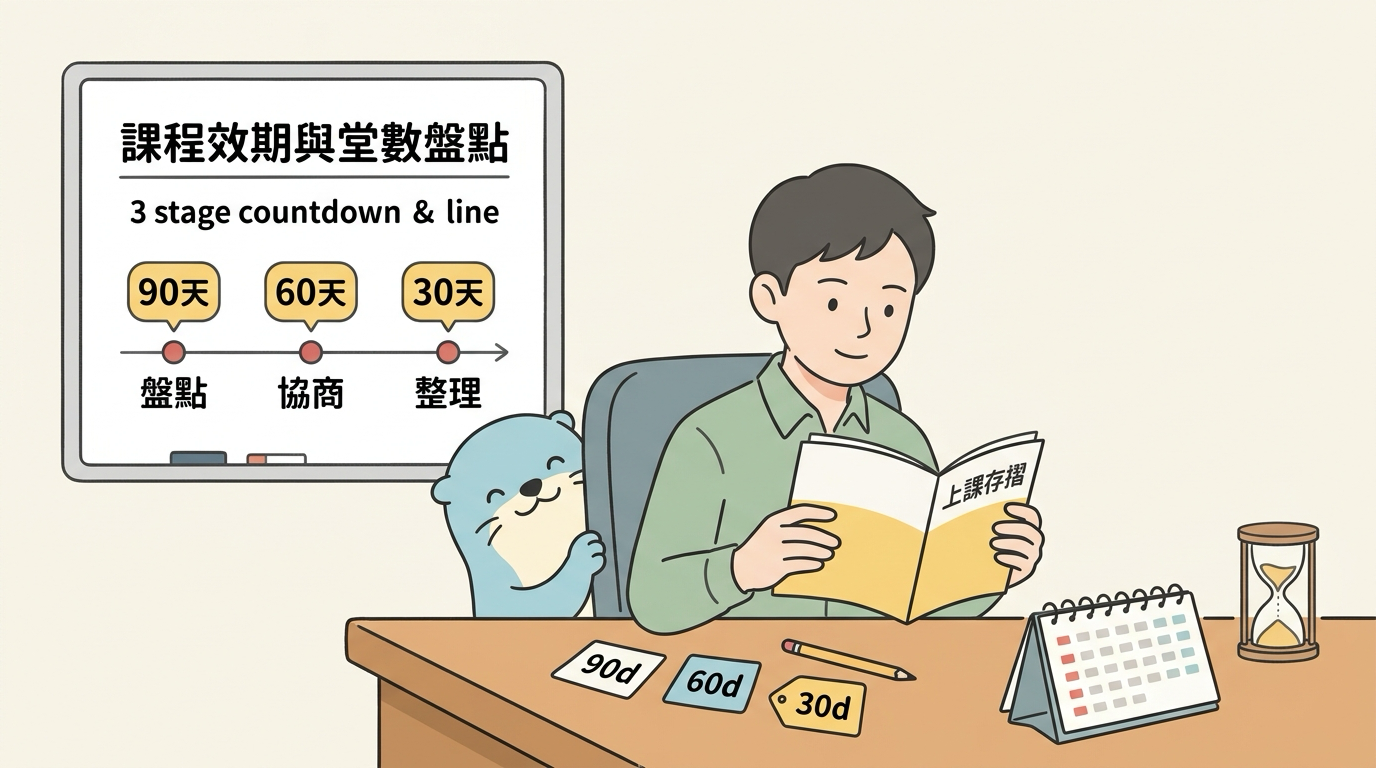
For how to close out sessions a client never used, see What to Do When Unused Lessons Expire: A 30/60/90-Day Action Plan. For the fields that track credits and adjustments, see How to Build a Lesson Tracking Spreadsheet: 6 Essential Columns and Formula Setup.
When to Sell 12 Sessions vs. 24 Sessions
Six scenarios to judge by:
- First-time client, habits and goals unproven
Sell 12 sessions and use the 2 to 3 months to build rapport, then review before renewal.
- Irregular shifts, frequent travel, or heavy family duties
Sell 12 sessions with a looser expiry and generous rescheduling.
- Six months of consistent training and a fixed slot
24 sessions is worth considering, since long-range planning allows deeper phase goals.
- New facility or a roster you are rebuilding
Stay with 12 sessions while you test commute, rent, and weekly delivery limits.
- A medium-term milestone such as a powerlifting meet or wedding prep
24 sessions works, split into three 8-session review phases.
- Lease or revenue split under negotiation
Avoid 24-session terms longer than three months, or you invite relocation and refund disputes.
Run a Review Every 4 to 6 Sessions to Give Long Packages Milestones
Most 24-session packages fail the same way: an assessment in session 1, then no checkpoint until a renewal pitch at session 23. Without milestones, clients slump around sessions 12 to 15, attendance drops, and remaining credits sit unused. Set aside 10 to 15 minutes every 4 to 6 sessions instead:
- Goal Alignment
How far along are the fat-loss, strength, or mobility goals, and has anything changed that needs adjusting?
- Attendance and Pace Review
How many sessions last month, are you behind, and should the recurring slot move?
- Movement Feedback and Program Tweaks
Are intensity, joint comfort, and post-workout soreness in a reasonable range?
- Lifestyle and Habit Check
Does the client need guidance on nutrition logging, sleep, or warming up alone?
- Preview of the Next Phase
Which training block the next 4 to 6 sessions cover, so expectations are clear.
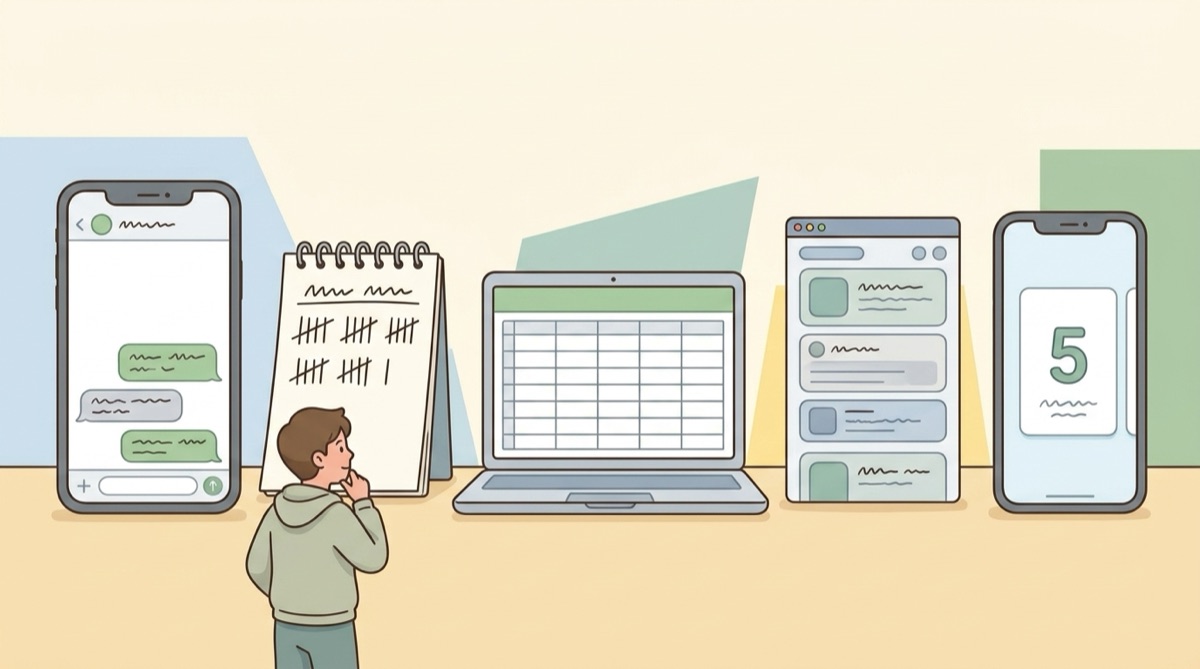
A check-in is not a sales pitch, and results are not something to promise. Its value is transparency: both sides correct course while the package is running, so credits do not go unused. To share session dates, summaries, and remaining credits with clients, see What Is Lesson Credit Management? The Complete Guide from LINE and Excel to Dedicated Apps.
Frequently Asked Questions (FAQ)
How can personal trainers design packages without overselling their capacity?
Which is better: a 12-session or 24-session package?
How should personal trainers calculate their per-session rate?
Do training packages always need discounts or bonus sessions?
How should a trainer handle unfulfilled sessions when a client stops attending?
How often should you run progress reviews during a 24-session package?
Conclusion: Build Deliverable Commitments First, Attractive Packages Second
Designing a package is not a choice between 12 and 24 sessions. It is a question of how long and how steady a commitment you can keep. Check five things before you open the next slot:
After travel and admin, how many slots a week can you actually coach?
How much of your capacity do current clients already hold?
How much buffer is left for client cancellations and your own time off?
Are expiry, rescheduling, and refund rules written down?
Do you and the client share one record of remaining credits and session notes?
A package is not about selling more sessions at once. It is about planning a stretch of teaching you can deliver. Try the Unit Price Calculator to size up your fulfillment capacity before you design the package.
References
- Course Kit Per-Session Unit Price Calculator
- Course Kit Blog
- Executive Yuan Consumer Protection Committee: Supplementary Education Refund Regulations
- Course Kit: What Is Lesson Credit Management? The Complete Guide from LINE and Excel to Dedicated Apps
- Course Kit: How to Build a Lesson Tracking Spreadsheet: 6 Essential Columns and Formula Setup
- Course Kit: How to Price Coaching Without Guessing: Reverse-Engineer Rates from Your Target Income